Hypoid Gears: Everything You Need to Know About This Bevel Gear Variant

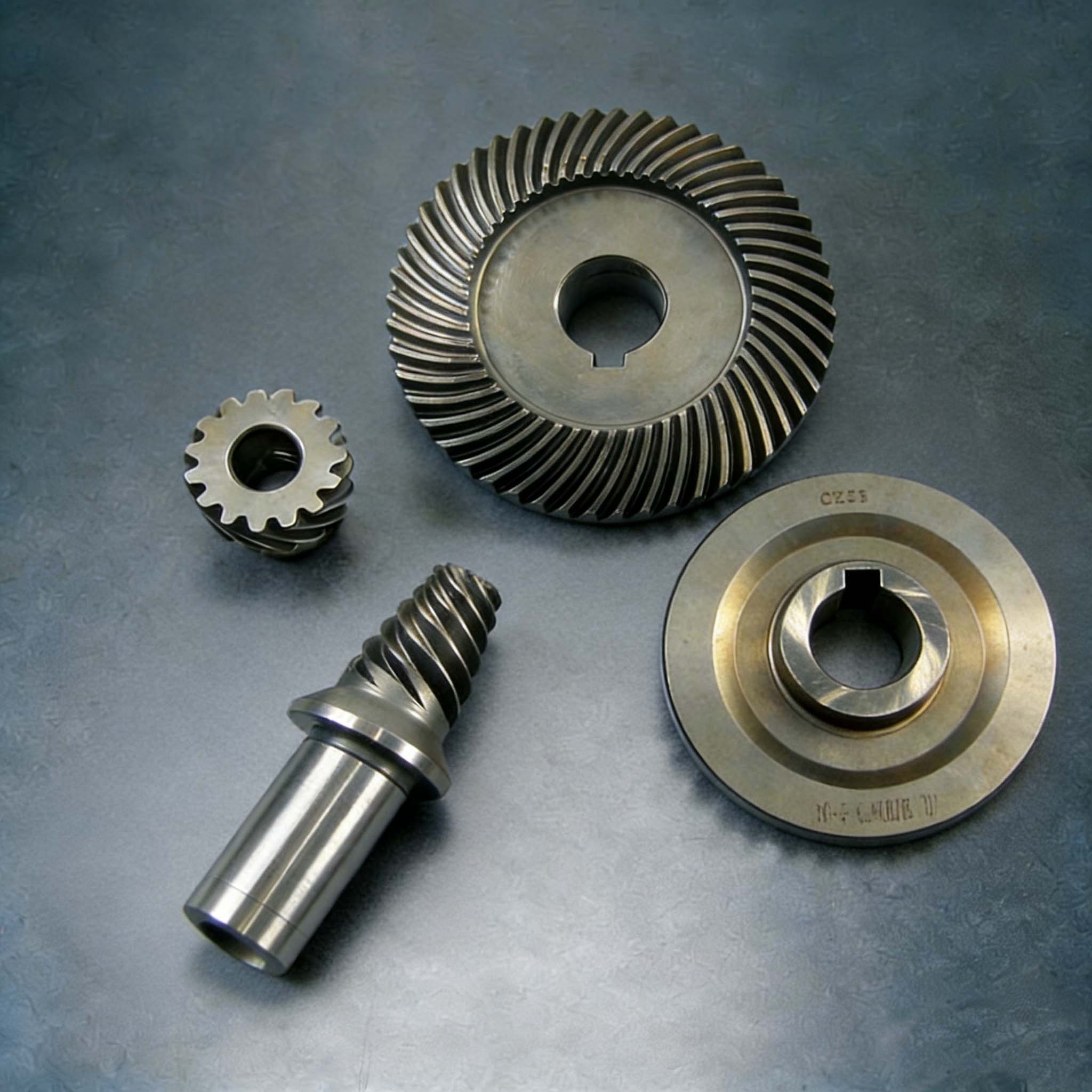
When it comes to power transmission systems, bevel gears are a staple in countless industrial and automotive applications. Among the various types of bevel gears, hypoid gears stand out for their unique design and exceptional performance in high-torque, right-angle drive scenarios. Whether you’re an engineer selecting components for a new project, a procurement professional sourcing reliable gear solutions, or simply an enthusiast eager to dive into gear technology, this guide will break down everything you need to know about hypoid gears—from their basic structure to their key advantages, applications, and selection tips.
What Are Hypoid Gears? A Quick Overview
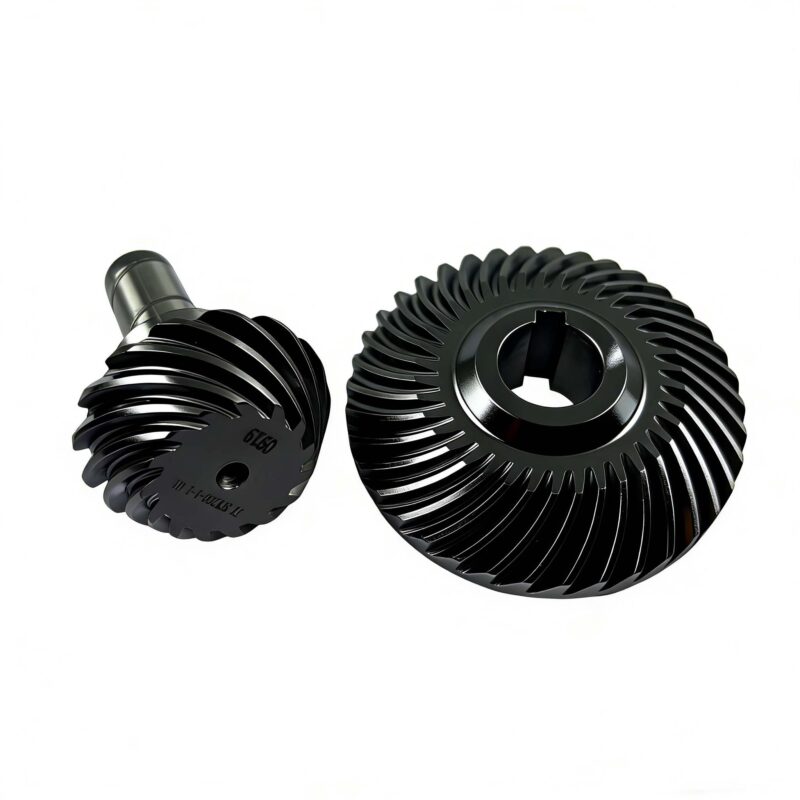
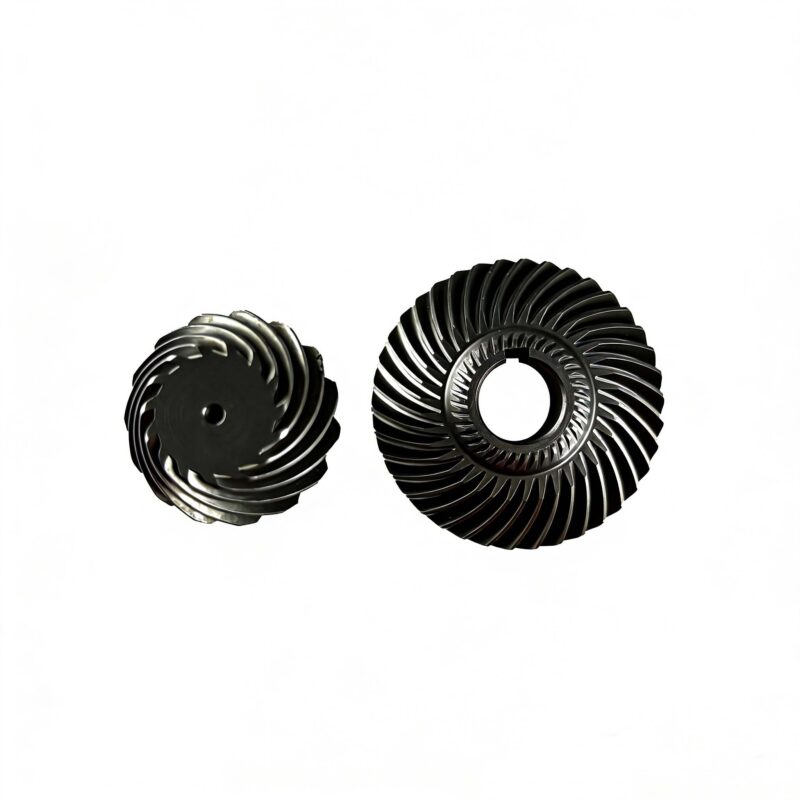
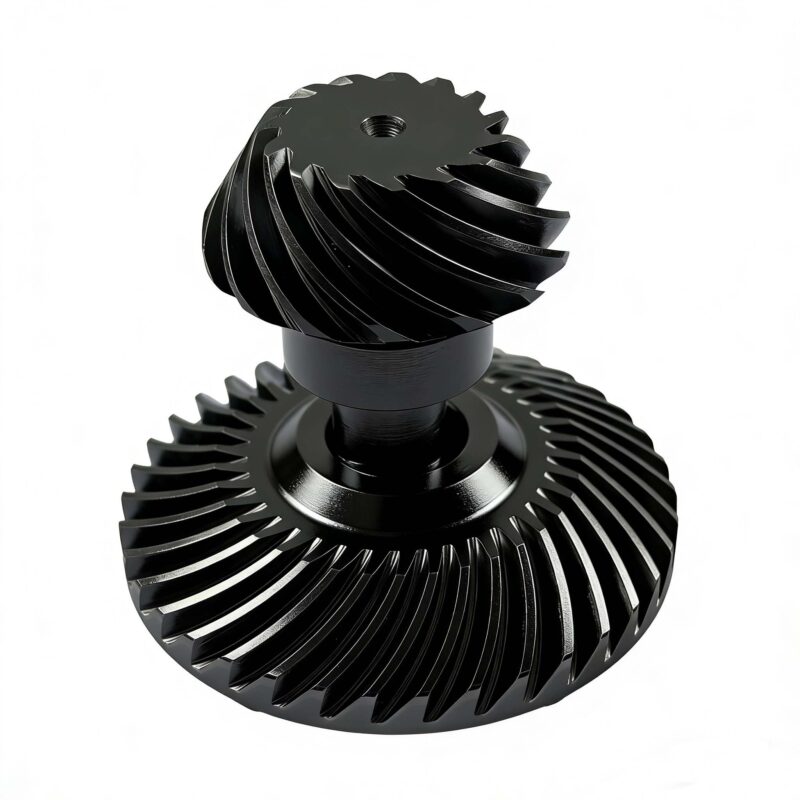
First, let’s clarify: Hypoid gears are a type of bevel gear, but with a critical difference that sets them apart from standard straight or spiral bevel gears. While traditional bevel gears have their axes intersecting at a 90-degree angle (a common setup in right-angle drives), hypoid gears feature axes that are offset—meaning they don’t intersect at all, even though they still operate at a right angle.
This offset design is made possible by the hyperboloid geometry of the gear teeth. Unlike the conical tooth profile of standard bevel gears, hypoid gear teeth are cut on a hyperbolic surface. This unique shape allows for smoother meshing, higher contact ratios, and the ability to transmit more torque compared to many other gear types. Think of them as “enhanced” bevel gears, optimized for applications where power, efficiency, and quiet operation are non-negotiable.
Key Advantages of Hypoid Gears Over Other Bevel Gears
Why choose hypoid gears over standard bevel gears or other transmission components? Here are the core benefits that make them a top choice in critical applications:
- Higher Torque Capacity: The hyperbolic tooth profile provides a larger contact area between meshing gears, allowing hypoid gears to handle significantly more torque than spiral bevel gears of the same size. This makes them ideal for heavy-duty applications like automotive drivetrains, industrial machinery, and construction equipment.
- Quieter and Smoother Operation: The gradual meshing of the hyperbolic teeth (as opposed to the more abrupt contact in straight bevel gears) results in much quieter operation. This is a major advantage in automotive applications (e.g., rear-wheel drive vehicles) and industrial settings where noise reduction is a priority.
- Offset Axes for Flexible Design: The non-intersecting, offset axes give engineers greater flexibility in designing power transmission systems. This offset allows for more compact packaging, which is crucial in space-constrained applications like automotive differentials, robotics, and small industrial gearboxes.
- Improved Efficiency at High Loads: While no gear is 100% efficient, hypoid gears maintain excellent efficiency even under high torque loads. Their smooth meshing reduces friction and wear, leading to longer service life and lower maintenance costs over time.
Common Applications of Hypoid Gears
Hypoid gears’ unique combination of torque capacity, quiet operation, and design flexibility makes them indispensable in several key industries. Here are the most common use cases:
- Automotive Industry (Most Prevalent Use)
The automotive sector is the largest consumer of hypoid gears, primarily in rear-wheel drive (RWD) and four-wheel drive (4WD) vehicles. They are used in the differential—a component that transfers power from the engine to the rear wheels while allowing them to rotate at different speeds (e.g., when turning). Hypoid gears’ ability to handle high torque (from the engine) and operate quietly makes them perfect for passenger cars, trucks, SUVs, and commercial vehicles.
- Industrial Machinery
In industrial settings, hypoid gears are found in heavy-duty equipment like conveyors, mixers, crushers, and industrial gearboxes. They excel in applications where a right-angle drive is needed and high torque must be transmitted reliably. For example, in a construction site conveyor system, hypoid gears ensure smooth power transfer even when the conveyor is moving heavy loads.
- Robotics and Automation
Robotics relies on compact, efficient gear systems to power joints and movements. Hypoid gears’ offset design and high torque density make them a great fit for robotic arms, AGVs (Automated Guided Vehicles), and other automated equipment where space is limited and precision is key.
- Marine and Aerospace
In marine applications, hypoid gears are used in small boat outboards and inboard propulsion systems, where they handle the torque from the engine while maintaining a compact footprint. In aerospace, they are occasionally used in auxiliary systems (e.g., landing gear mechanisms) due to their reliability and efficiency.